
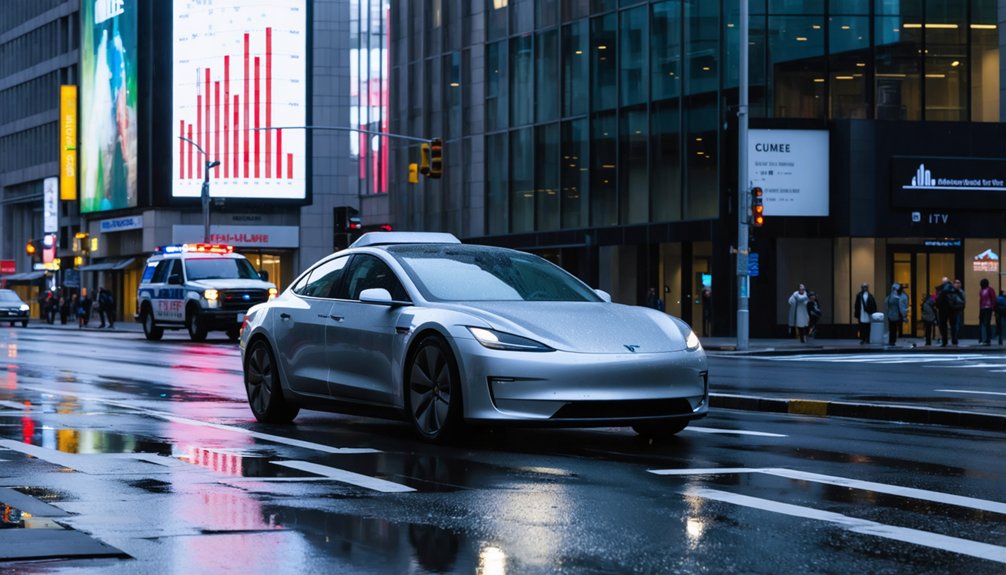

Electric‑vehicle insurance premiums rise because sticker prices are higher, setting a larger replacement‑cost ceiling. Battery packs, often 30‑50 % of vehicle value, add costly replacement risk despite low failure rates. Specialized, high‑voltage repairs require trained technicians and limited OEM parts, inflating claim costs and extending shop time. Performance metrics such as instant torque push vehicles into higher risk groups. In regions with sparse EV service networks, insurers apply broader multipliers. Tax incentives, tariffs and evolving policies also shift exposure, and further insight reveals how to mitigate these costs.
Key Takeaways
- Sticker price and vehicle value: higher EV MSRPs raise replacement‑cost ceilings, leading to 18‑49% higher premiums.
- Battery cost and replacement risk: batteries can be 30‑50% of vehicle value; rare but expensive replacements drive up rates.
- Repair complexity and parts availability: specialized high‑voltage repairs, OEM‑only parts, and limited service networks increase claim costs.
- Performance characteristics: high‑torque, rapid‑acceleration models are placed in higher insurance groups, raising premiums.
- Safety features and discounts: ADAS, anti‑theft, and telematics eligibility can offset costs; lack of discounts networks in low‑adoption regions raises rates.
How EV Sticker Prices Drive Higher Premiums
Amid soaring vehicle values, insurers base EV premiums on the higher sticker prices that set the replacement cost ceiling. EV valuations now anchor on MSRP averages of $55,500, dwarfing the $49,700 typical for gasoline models. This premium pricing translates directly into elevated baseline premiums, as insurers must cover full MSRP in total‑loss scenarios. Even as MSRP erosion eases pressure, the ceiling remains high, sustaining a gap of 18–49 % between electric and conventional coverage costs.
Data show annual EV premiums around $4,058, roughly 49 % above gas‑car averages, with models like the Honda Prologue reflecting a $53 K sticker versus a $30 K CR‑V counterpart. The persistent valuation premium compels insurers to adjust rates upward, reinforcing the link between sticker price and insurance cost. Battery‑pack value significantly contributes to the higher replacement cost, as it can represent up to 40 % of the vehicle’s total MSRP. Higher repair costs also drive premiums up because specialized parts and training are required. Limited historical data makes insurers cautious, often leading to higher rates to cover unknown long‑term risks.
Why Battery Costs and Replacement Risks Raise Insurance Rates
Higher sticker prices set a costly ceiling, but the true driver of elevated EV insurance premiums lies in the expense and uncertainty surrounding battery replacement. Battery packs constitute 30‑50 % of a vehicle’s value, and replacement costs range from $5,000 for compact models to over $20,000 for luxury and electric trucks. This financial exposure forces insurers to price risk sharply. Warranty limitations exacerbate the issue: factory coverage ends after 8‑10 years or 100,000 miles and only triggers when capacity falls below 65‑75 %. Once that window closes, owners—and their insurers—face full depreciation costs. Even though battery depreciation occurs gradually, the prospect of a high‑cost failure drives higher premiums, encouraging policyholders to seek community through specialized EV protection plans. Repair networks are still scaling, causing price variability. Battery price trends are decreasing, yet full replacements remain rare. Only 2.5 % of all EV batteries have ever been replaced.
The Impact of Specialized Repairs and Limited Service Networks
Through a combination of higher repair costs, specialized repair complexity, and a limited service network, EV insurance premiums are being driven upward.
The average EV repair claim now exceeds $6,000, roughly 30% higher than gasoline counterparts, while parts are 2.7% more expensive.
Technicians must undergo specialized training to handle high‑voltage systems and decipher nearly twice the fault codes of ICE vehicles, inflating labor rates.
Additionally, OEM dominance—evidenced by 87.2% OEM part usage—restricts aftermarket options, forcing facilities to charge premiums for proprietary components.
Sparse qualified service centers extend shop time to 31 days, delaying claim resolution.
Insurers consequently raise monthly rates, reflecting the amplified risk and cost embedded in this constrained repair ecosystem.
EV owners face higher average monthly premiums: $357/month for EVs vs. $248/month for gas vehicles.
Battery‑related risks increase insurance costs due to potential fire hazards and specialized repair requirements.
BEV repairable claim frequency has risen sharply, adding further pressure on repair costs.
How Performance Specs and Torque Influence Insurance Groups
Limited repair‑network constraints already strain EV insurance costs, and the next driver of premium escalation is the vehicle’s performance envelope. Higher power‑to‑weight ratios raise top speeds and loss expectations, prompting insurers to assign steeper groups. Instant torque amplifies acceleration profiles, making high‑torque models such as the Tesla Model X and Kia EV6 especially costly—annual premiums can exceed $4,800 and $2,800 respectively. Premium‑focused crossovers like the Mustang Mach‑E and luxury sedans such as the Model S also attract higher rates because their rapid acceleration signals greater misuse risk. In contrast, modest‑power EVs (e.g., Nissan Leaf, Hyundai Kona Electric) remain in lower groups, reflecting reduced claim frequency and loss severity. This tiered approach aligns risk‑based pricing with measurable performance metrics. As EV adoption rises, the limited repair‑shop network expands, gradually reducing cost pressures.
Regional Adoption Gaps: Why Low‑EV Areas See Steeper Premiums
Across the United States, regions with sparse electric‑vehicle adoption experience markedly higher insurance premiums than their high‑adoption counterparts, a disparity driven by limited repair networks, scant local claims data, and heightened regional risk factors.
In rural perception, drivers confront few certified shops, forcing insurers to price repairs at a premium because specialized parts and high‑voltage expertise are scarce. Dealer incentives that prioritize urban markets further widen the gap, leaving low‑EV states such as Arkansas, Idaho, and parts with premiums up to 49 % higher than the national average.
Limited claims history compels underwriters to apply conservative risk models, while high accident rates and theft concerns in these areas amplify loss costs. Consequently, low‑adoption regions bear steeper premiums despite comparable vehicle values.
Data Gaps and Insurer Caution: The Role of Historical Claims History
Sparse EV adoption in rural markets leaves insurers without the longitudinal loss experience needed to calibrate risk, prompting a shift toward heightened caution in pricing and underwriting.
Data scarcity forces underwriters to rely on early trend snapshots, such as Mitchell’s Q2 2025 figures, rather than robust multi‑cycle loss histories. Consequently, actuarial models apply broad multipliers, inflating premiums by roughly 49 % compared with ICE vehicles.
Lifecycle uncertainty compounds the issue: limited fleet age data obscure failure patterns of batteries, ADAS, and high‑voltage systems, while volatile used‑EV values thwart reliable depreciation forecasts.
Insurers respond with higher compulsory excesses and conservative claim reserves, emphasizing the need for collective confidence as the market matures.
This cautious stance reflects both the present evidentiary gap and the anticipation of evolving risk profiles.
How Tax Incentives, Tariffs, and Policy Changes Affect Overall Costs
Through a combination of tax incentives, tariffs, and evolving policy frameworks, the net cost of owning and insuring an electric vehicle is reshaped on three fronts: purchase price, repair expense, and risk exposure.
Tax credits lower the sticker price, reducing declared vehicle value and consequently easing insurer exposure, while salary‑sacrifice schemes bundle pre‑tax insurance, cutting effective ownership costs by up to 25 %.
Tariff impacts raise battery and component prices, inflating repair bills and pushing premiums 18‑49 % higher than for gasoline cars.
Policy shifts that expand EV‑trained service networks and introduce benefit‑in‑kind tax treatments further narrow the premium gap, driving average EV insurance costs toward parity with conventional vehicles and fostering a sense of shared financial benefit among adopters.
Strategies to Lower Your EV Insurance Bill Without Compromising Coverage
By strategically selecting a lower‑priced used EV, adjusting deductibles, stacking available discounts, and leveraging built‑in safety technologies, owners can substantially reduce insurance premiums without sacrificing coverage depth.
Choosing a vetted used model—often sourced through Buyback Programs—lowers vehicle value and consequently collision and comprehensive rates, while avoiding high‑repair‑cost designs eliminates premium penalties. Raising the collision deductible from $500 to $1,000 typically cuts premiums by 28%, provided cash reserves cover the higher out‑of‑pocket cost.
Bundling auto with home or renters policies, enrolling in telematics UBI programs, and highlighting ADAS, anti‑theft, and Night Charging safety features can unlock 5‑25% discounts.
Regular quote comparisons, maintaining a clean record, and accruing no‑claim bonuses further solidify cost‑effective, comprehensive coverage.
References
- https://www.aftermarketmatters.com/national-news/evs-cost-49-percent-more-to-insure-than-gas-powered-cars/
- https://www.cbtnews.com/insurify-data-shows-ev-insurance-costs-nearly-50-more-than-traditional-cars/
- https://www.latimes.com/business/story/2025-08-28/insurance-premiums-hike-up-the-price-of-evs
- https://content.naic.org/insurance-topics/electric-vehicle-insurance-rates
- https://www.recurrentauto.com/research/does-ev-insurance-cost-more
- https://www.kbb.com/car-news/study-evs-cost-49-more-to-insure/
- https://www.acg.aaa.com/connect/blogs/5c/insurance/cost-of-electric-vehicle-car-insurance
- https://www.electriccarscheme.com/blog/are-electric-cars-more-expensive-to-insure
- https://www.reinsurancene.ws/sharp-rise-in-electric-vehicle-insurance-premiums-and-unsustainable-write-offs-fwd/
- https://recharged.com/articles/why-do-evs-cost-more-to-insure